Yamato period
Period of imperial rule from Yamato Province, shaping early Japan.

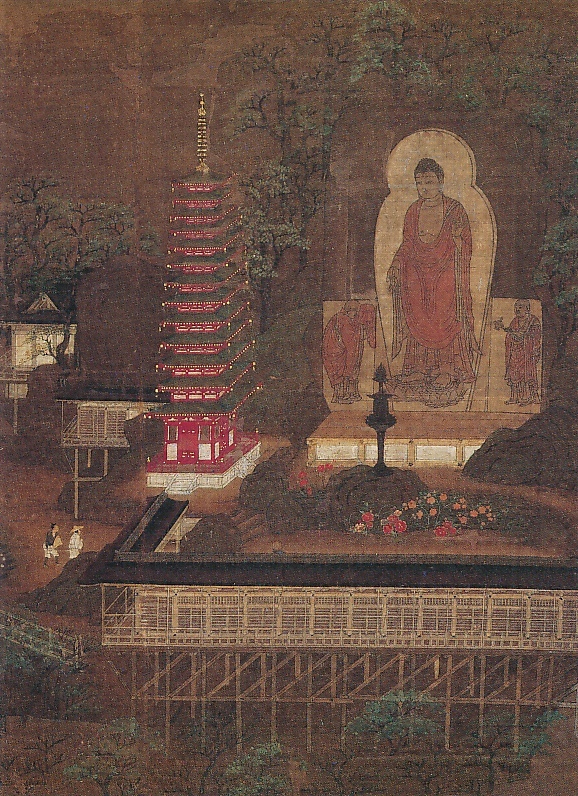
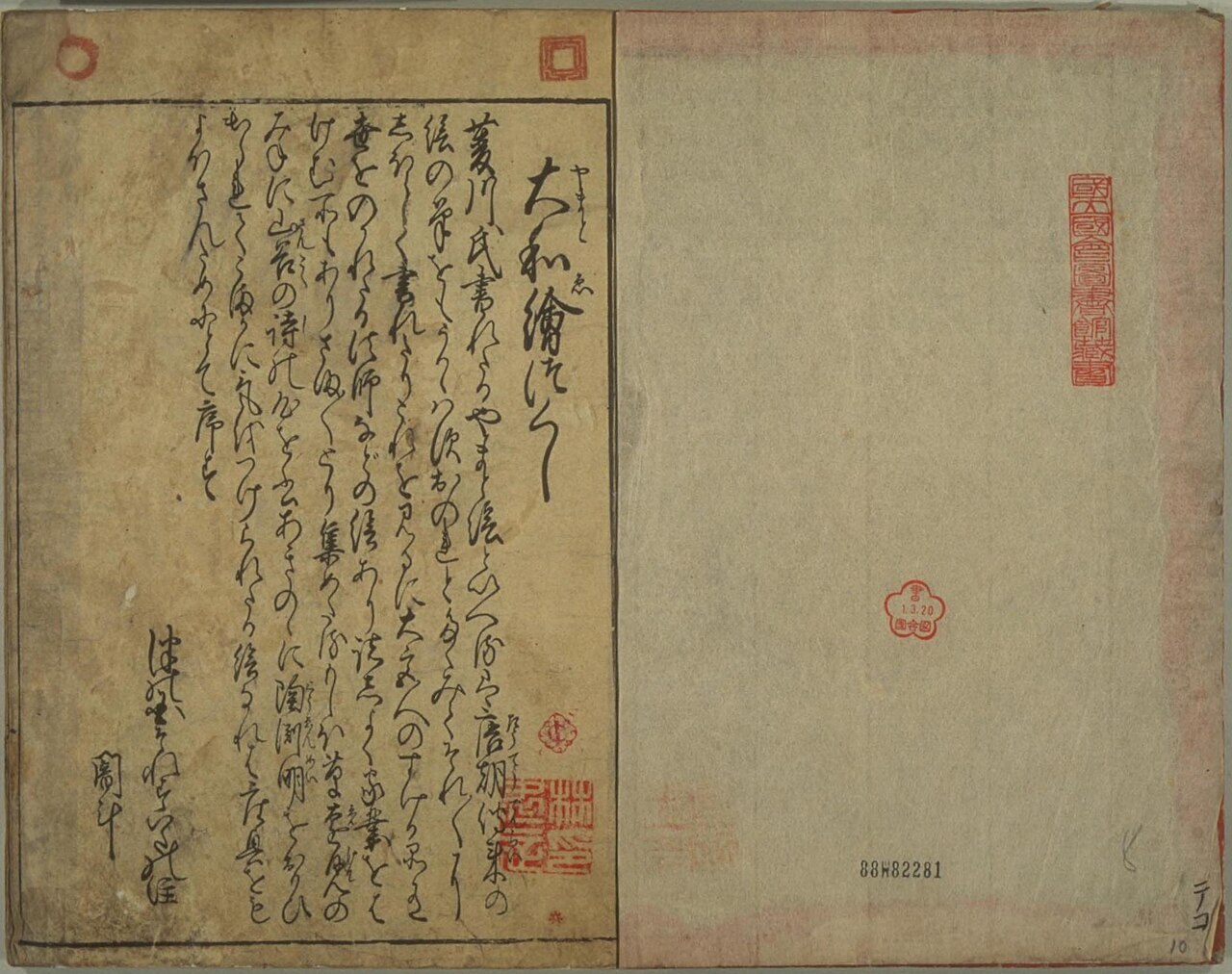
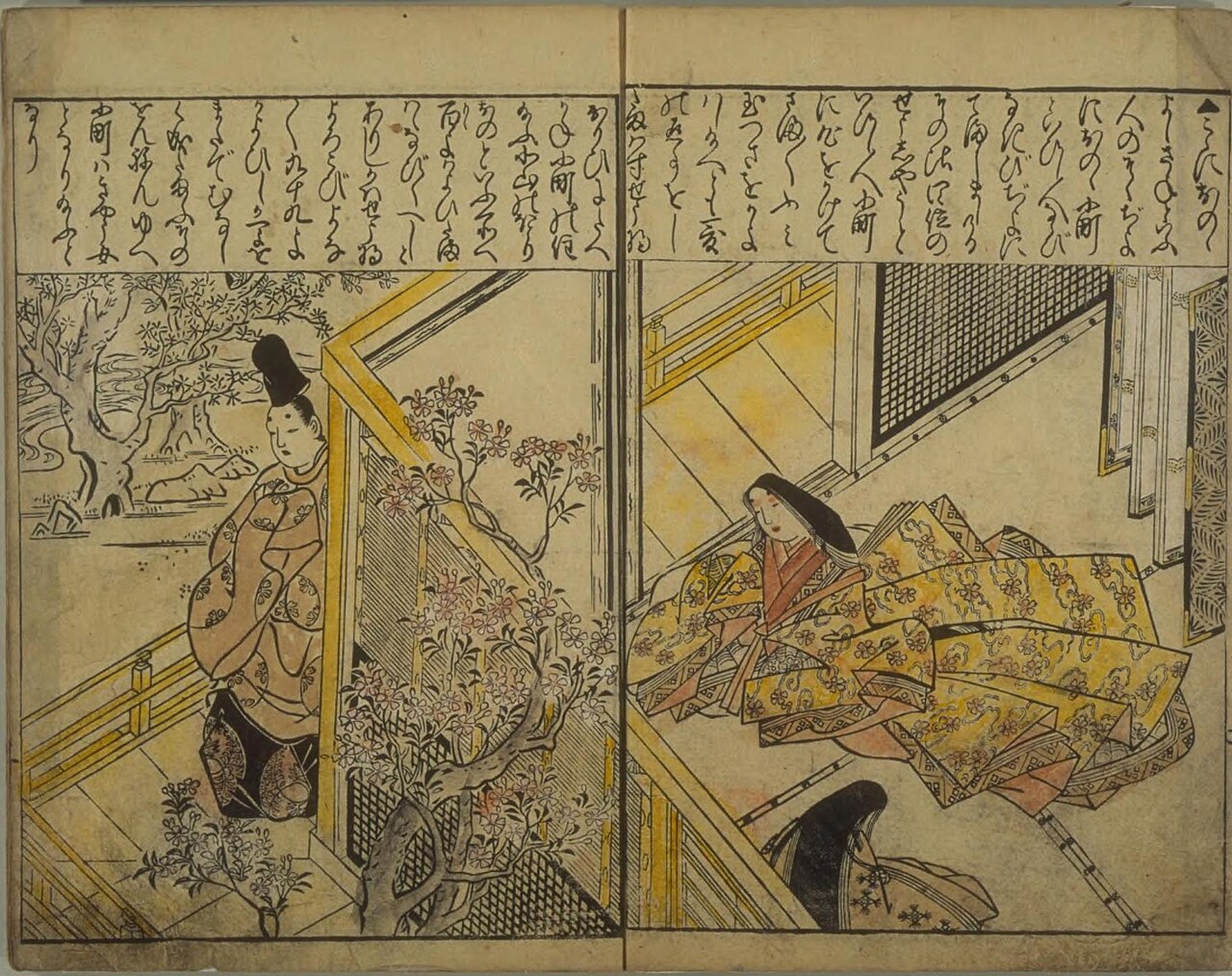
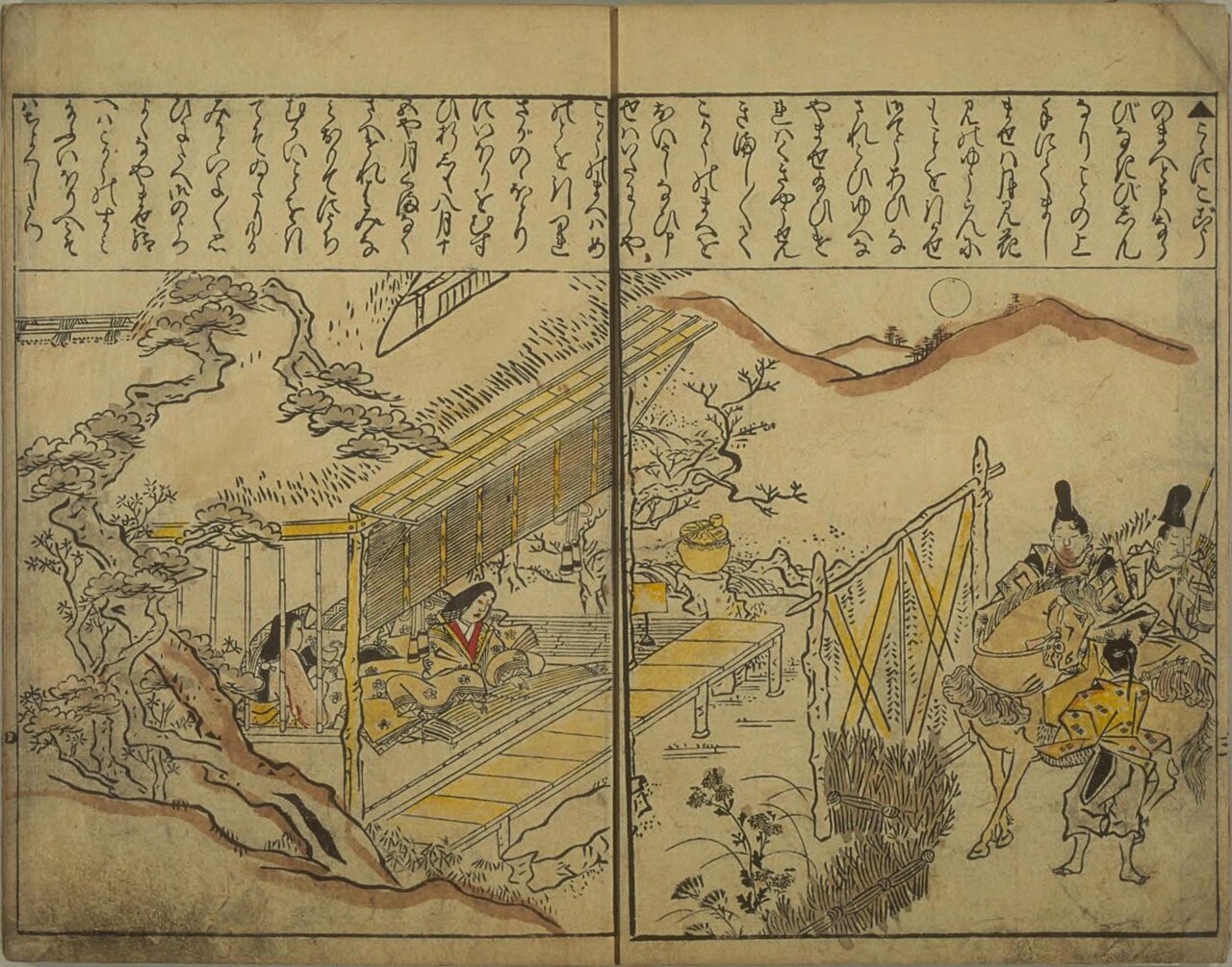
Hishikawa Moronobu · Public domain
The Yamato period (大和時代, Yamato-jidai) is the period of Japanese history when the imperial court ruled from modern-day Nara Prefecture, then known as Yamato Province. The Yamato court's supremacy was challenged during the Kofun period by other polities, but Yamato clans had major advantages over their neighbouring clans in the 6th century. This period is divided by the relocation of the capital to Asuka, in modern Nara Prefecture.
- Location
- Yamato Province (modern Nara Prefecture)
- Key Development
- Adoption of Chinese model constitution under Prince Shōtoku
- Cultural Influence
- Confucianism, Taoism, Chinese calendar
- Notable Immigrant Groups
- Clans from Baekje, Goguryeo, Silla, Gaya, and Kan
Lore & Background
The Kofun period (c. During this time, elements of Chinese culture continued to influence Japan through migration and trade, and the Yamato polity emerged by the late 5th century, distinguished by powerful clans headed by patriarchs who performed sacred rites. The Yamato state evolved much during this period, which is named after the Asuka region south of modern Nara.
Reader's Guide
The Yamato period is significant as the era when the imperial court established its rule from Yamato Province, laying the foundation for the Japanese state. This led to the introduction of Confucian philosophy, the Chinese calendar, and religious practices such as Confucianism and Taoism. The period also saw the construction of massive kofun tombs for emperors like Ōjin and Nintoku, and the influx of immigrants from the Korean peninsula, who played a key role in transmitting Chinese culture. The Azumi people, a warrior tribe from northern Kyushu, provided maritime trade links and served as the naval force for the emerging imperial state. The Yamato period thus represents a critical stage in Japan's evolution toward a more cohesive and recognized state, with its legacy enduring in the imperial institution and cultural traditions.
Did You Know?
- The Azumi people, considered by some experts as the oldest known maritime force of Japan's emerging imperial state, were employed as the Yamato court's naval force from the 3rd to 5th centuries.
Anatomy of Imperial Structure
An empire, at its core, is a vast political entity that stretches beyond the borders of its founding territory, binding together lands and peoples under a single supreme authority or ruling oligarchy. This sets it apart from a federation, where autonomous states and communities voluntarily join together. Within an empire, the central power—often called the metropole—exercises political dominance over peripheral regions, and the populations it governs may enjoy entirely different sets of rights depending on their location or status. Scholars like Peter Bang emphasize that empires are composite and layered, far from internally uniform, with territories and communities subjected hierarchically in varied ways to a dominant power. Tom Nairn and Paul James add that empires extend relations of power across spaces where the ruling polity holds no prior legal sovereignty, gaining some measure of hegemony to extract or accumulate value. Rein Taagepera offers a simpler formulation: an empire is any relatively large sovereign entity whose constituent parts lack sovereignty themselves. Yet sometimes the label is purely semantic—a ruler simply adopts the title of emperor, and the polity over which they reign becomes an "empire" by declaration alone, regardless of its actual structure.
Land, Sea, and the Many Shapes of Empire
Throughout history, empires have manifested in fundamentally different configurations. One major distinction separates tellurocracies—empires built on land forces and composed largely of contiguous territory, exemplified by the Roman and Mongol empires—from thalassocracies, which depend on naval power and incorporate territories scattered far from the imperial core, as seen in the Dutch Colonial and British empires. The very word "empire" traces back to the Roman concept of Imperium, and in its narrowest sense it describes a sovereign state exercising control over multiple distinct territories. Yet the label is not applied uniformly: not every state that holds aggregate territory under supreme authority is called an empire, and not every polity that self-identifies as one has been recognized as such by its contemporaries or by later historians. The Central African Empire of 1976 to 1979 and certain early Anglo-Saxon kingdoms in England serve as examples of polities that claimed imperial status without widespread acceptance. This inconsistency underscores that the boundary between "empire" and other forms of political organization is far more fluid than a simple dictionary definition might suggest.
The Great Theoretical Divide
The interpretation of empire and imperialism has long been a site of fierce scholarly disagreement. Michael Doyle defines empire as the effective control, whether formal or informal, of a subordinated society by an imperial one, treating imperialism as the process of establishing and maintaining that control. Rein Taagepera frames it as a policy of conquest and domination of foreign lands and populations. The Marxist tradition took a sharply different path: Lenin redefined imperialism as the highest stage of capitalism, anchoring its history in the 1760s and stripping the concept of its political essence in favor of economic analysis. This drew heavy criticism from mainstream historians, who noted the logical difficulty of a concept that cannot exist before 1876 yet must explain two millennia of history. Kenneth Waltz argued that capitalism, as the supposed cause, appears far younger than the effect it is meant to explain. George Steinmetz insisted that empires, involving the cessation of state sovereignty, belong in the domain of politics rather than economics. Lenin's work was often read as a political pamphlet rather than a scientific thesis, and in the non-Western world the term "imperialist" came to carry the weight of a 20th-century figure of pure malevolence.
Beyond the European Lens
Most historians acknowledge that the practice of imperial domination predates European colonialism by several millennia, yet as of the early 21st century, the majority of theoretical frameworks for understanding empire remained deeply Eurocentric. This bias reflected the relatively brief period during which European empires dominated global affairs, and it risked reducing the vast, ancient history of imperial power to a single regional episode. The 2021 Oxford World History of Empire called for widening this perspective, insisting that the so-called "Age of Imperialism" must be situated within a proper world history of empires, recognizing that millennia of political history passed before Europe could claim to dictate the course of world events. In popular thought, the word "empire" has also drifted far from its political roots, becoming associated with imperialism, colonialism, and globalization. Colloquially, it can describe a large-scale transnational business enterprise, a political organization dominated by a single boss or a small group of bosses, or simply any overpowering situation that causes widespread displeasure. This semantic drift illustrates how the concept of empire has become a flexible, often emotionally charged term that extends well beyond the realm of formal political science.
Gallery
Frequently Asked Questions
Where was the Yamato court located?
The imperial seat sat in Yamato Province, which corresponds to modern Nara Prefecture. The capital was later shifted to Asuka, still within that same region, and that move gave the second sub-period its name.
What major constitutional change defined the Yamato period?
Under Prince Shōtoku, the court adopted a Chinese-model constitution infused with Confucian and Taoist principles, alongside the Chinese calendar system. This represented a decisive turn toward structured, bureaucratic governance in early Japan.
Why is the Yamato period important in Japanese history?
It is the foundational era in which Japan's imperial institution and centralized state framework first took coherent shape, setting the template for all later Japanese political organization. The period also saw waves of immigrant clans from Baekje, Goguryeo, Silla, and Gaya, which broadened Japan's cultural and administrative horizons.
More in Ancient Empires And Kingdoms 1-22
Spotted an error? Know more?
This is a living reference — every entry is fact-audited, and reader corrections feed straight into our audit queue. Suggest an edit · See this site's audit record