Third Intermediate Period of Egypt
Era of divided rule and foreign domination in ancient Egypt.

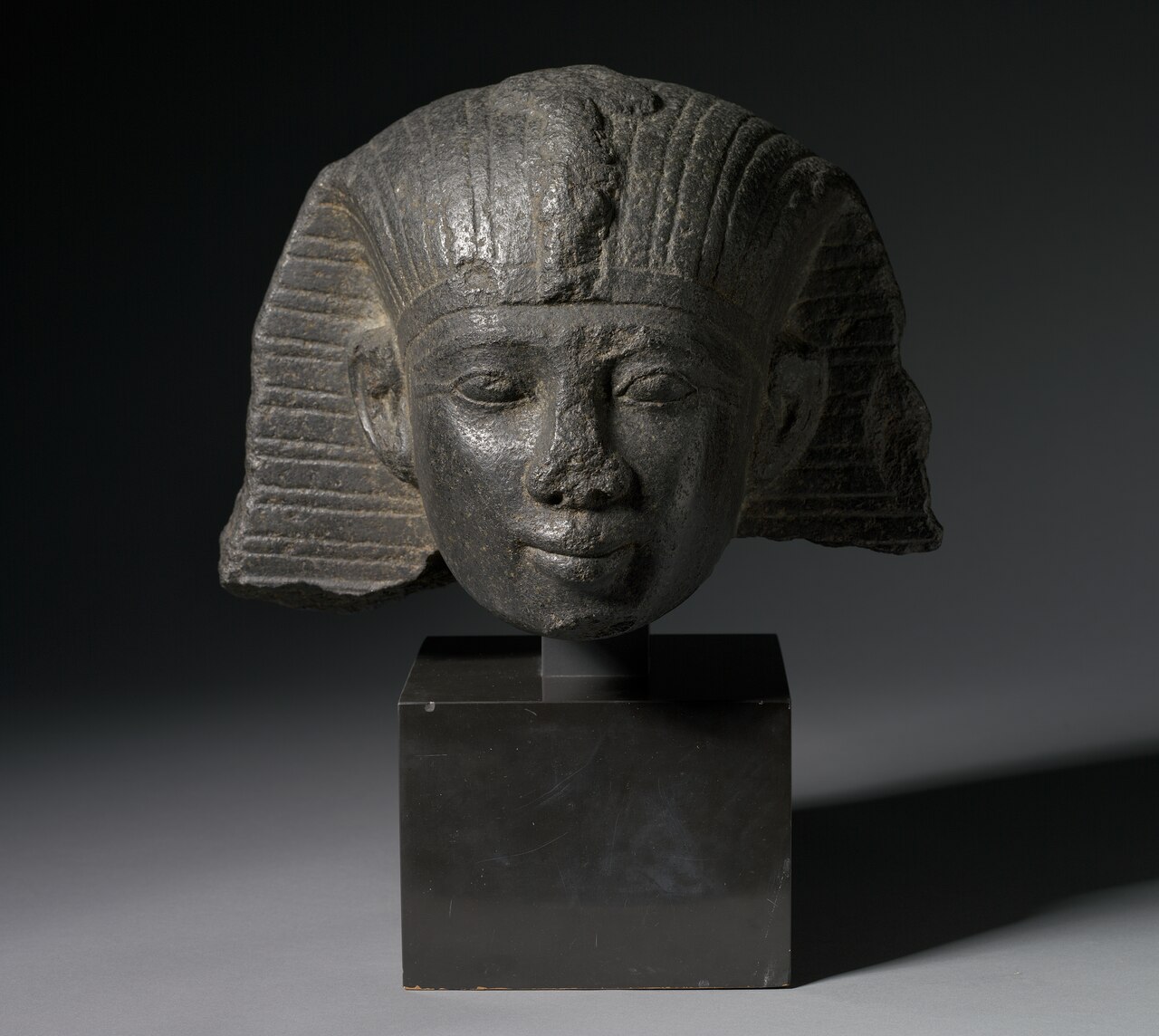
Original artist unknown; photograph by Daderot . · Public domain
It is characterized by political fragmentation, periods of rule by non-native Egyptians, and is viewed as a time of decline and instability coinciding with the Late Bronze Age collapse.
Lore & Background
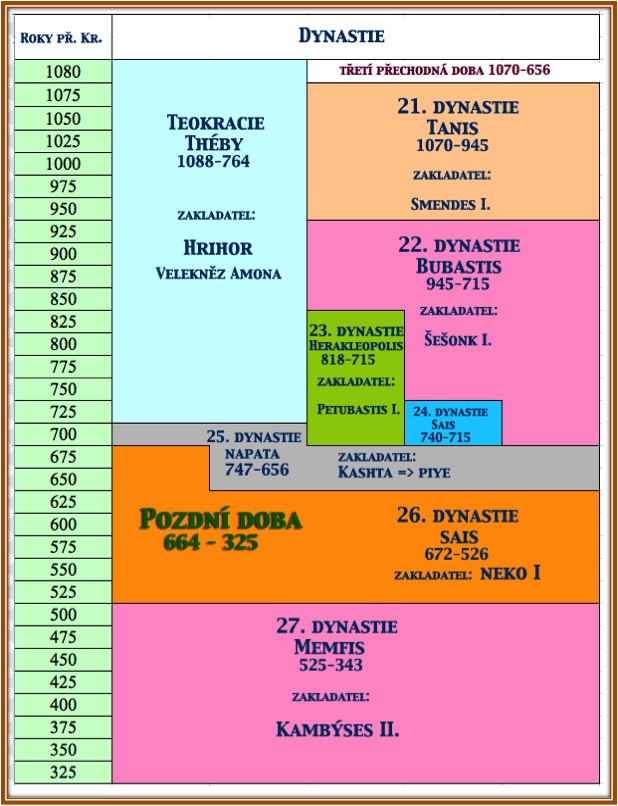
The period began with the death of Ramesses XI, after which Smendes I ruled from Tanis while the High Priests of Amun controlled Thebes. Civil war in Thebes was resolved by Pedubast I or Takelot II, who founded the Twenty-third Dynasty, which quickly fragmented into local city states.
Reader's Guide
The Third Intermediate Period saw the rise of the Nubian Twenty-fifth Dynasty under Piye, who reunited the Nile valley. Psamtik I, a client king of the Assyrians, later freed himself from vassalage and united Egypt, beginning the Late Period.
Did You Know?
- The Twenty-second Dynasty was founded by Shoshenq I, who descended from Meshwesh immigrants from ancient Libya.
- The 25th Dynasty pharaohs built pyramids at El-Kurru and Nuri in Nubia (modern Sudan), not in the Nile valley of Egypt proper.
The Fracturing and Reunification of the Nile Valley
The Third Intermediate Period opened with a kingdom already in pieces. When Ramesses XI died in 1077 BC, the Twentieth Dynasty's grip on Thebes had slipped to the powerful priests of Amun. His successor, Smendes I, set up court at Tanis and governed effectively only Lower Egypt, while the High Priests of Amun administered the middle and southern reaches. Both lines, however, descended from the same family, softening what otherwise resembled a clean political split. The state remained divided until Shoshenq I, a descendant of Meshwesh immigrants from ancient Libya, founded the Twenty-second Dynasty around 945 BC and firmly reunited the land. That stability endured through Osorkon II's reign, but after him the country fractured once more. By 818 BC, Shoshenq III held Lower Egypt while Takelot II and his son Osorkon governed the south. Thebes itself was consumed by civil war between Pedubast I and the Takelot-Osorkon line, a conflict that dragged on until Osorkon B crushed his rivals in Year 39 of Shoshenq III. He then founded the Twenty-third Dynasty, yet after Rudamun's death the southern kingdom shattered into rival city-states under local rulers at Herakleopolis, Hermopolis, and Thebes.
The Nubian Conquest and the 25th Dynasty
The political chaos in Egypt created an opening for the Nubian kingdom to the south. Before Piye's major campaign, his predecessor Kashta had already extended Nubian influence into Thebes by compelling Shepenupet, the Divine Adoratice of Amun, to adopt his daughter Amenirdis as her successor. Around 732 BC, Piye marched north and defeated the combined forces of four native Egyptian rulers: Peftjaubast, Osorkon IV of Tanis, Iuput II of Leontopolis, and Tefnakht of Sais. Rather than eliminating them, Piye appointed the defeated kings as his provincial governors, establishing the Twenty-fifth Dynasty. He was succeeded by his brother Shabaka and then by his sons Shebitku and Taharqa. The reunited Nile valley empire rivaled the size of the New Kingdom. Pharaohs of this dynasty built or restored temples at Memphis, Karnak, Kawa, and Jebel Barkal. All 25th Dynasty pharaohs were buried at El-Kurru and Nuri in Napata, beneath the first pyramids raised in the Nile valley in hundreds of years. This Napatan dynasty ultimately gave rise to the Kingdom of Kush, which flourished until at least the 2nd century AD.
The Iron Disparity and Assyrian Conquest
By the time of the 25th Dynasty, Egypt's international prestige had faded considerably. The country's former allies had fallen into Assyria's sphere of influence, and from around 700 BC the question shifted from whether to war with Assyria to when. Esarhaddon recognized that conquering Lower Egypt was essential to protecting Assyrian interests in the Levant. A critical structural disadvantage plagued Egypt: a chronic shortage of timber meant the country could not produce enough charcoal for iron-smelting, whereas Assyria possessed a far greater timber supply and thus a superior output of iron weaponry. This disparity proved decisive during the Assyrian invasions between 670 and 663 BC. Taharqa's and Tantamani's reigns were consumed by constant conflict with the Assyrians. In 664 BC, the Assyrians delivered a devastating blow, sacking both Thebes and Memphis. After these events, beginning with Atlanersa, no Kushite ruler would ever govern Egypt again.
Historiographical Framing and the Period's Legacy
The very name 'Third Intermediate Period' is a relatively modern construction. Based on analogy with the earlier First and Second Intermediate Periods, the term gained widespread acceptance in 1978 when British Egyptologist Kenneth Kitchen used it as the title of his book on the era. Ironically, Kitchen himself argued the period was 'far from being chaotic' and preferred the label 'Post-Imperial epoch,' hoping his work would lead to the term's abandonment. His choice of title, however, only entrenched the phrase in scholarly usage. The period is broadly characterized as one of decline and political instability, marked by the division of the state and the rule of non-native Egyptians. It coincided with the broader Late Bronze Age collapse of civilizations across the ancient Near East and Eastern Mediterranean, including the Greek Dark Ages. Spanning from Ramesses XI's death in 1077 BC to the foundation of the Twenty-Sixth Dynasty by Psamtik I in 664 BC, the era ultimately gave way to the Late Period, though scholars still debate the precise starting point of that successor era.
Gallery
Frequently Asked Questions
What caused the Third Intermediate Period of Egypt?
The collapse of centralized pharaonic power after Ramesses XI's death left Egypt without a single strong ruler, inviting regional governors and foreign powers to carve out their own spheres of influence. This fragmentation coincided with the broader Late Bronze Age collapse that destabilized empires across the eastern Mediterranean.
Why is the Third Intermediate Period of Egypt important?
It represents one of the longest stretches of political disunity in Egyptian history and shows how the loss of a unifying pharaoh triggered a cascade of regional and foreign domination. For scholars, it also serves as a case study in how ancient states fracture while cultural continuity persists through centuries of divided rule.
More in Ancient Empires And Kingdoms 1-22
Spotted an error? Know more?
This is a living reference — every entry is fact-audited, and reader corrections feed straight into our audit queue. Suggest an edit · See this site's audit record